Thermal Stability
The solubility of coffee compounds is inextricably tied to water temperature. Brew too cold (below 90°C), and you fail to extract the heavy, sweet molecules, resulting in an acidic, sour shot. Brew too hot (above 96°C), and you extract astringent tannins and bitter compounds. Predictability is everything.
Thermostats vs. PID Controllers
Older or cheaper machines rely on mechanical thermostats. These work on a deadband system: the heater turns on when the boiler drops to 90°C and turns off when it hits 98°C. This forces baristas to "temperature surf"—flushing water to artificially drop the boiler to an estimated correct temperature before brewing.
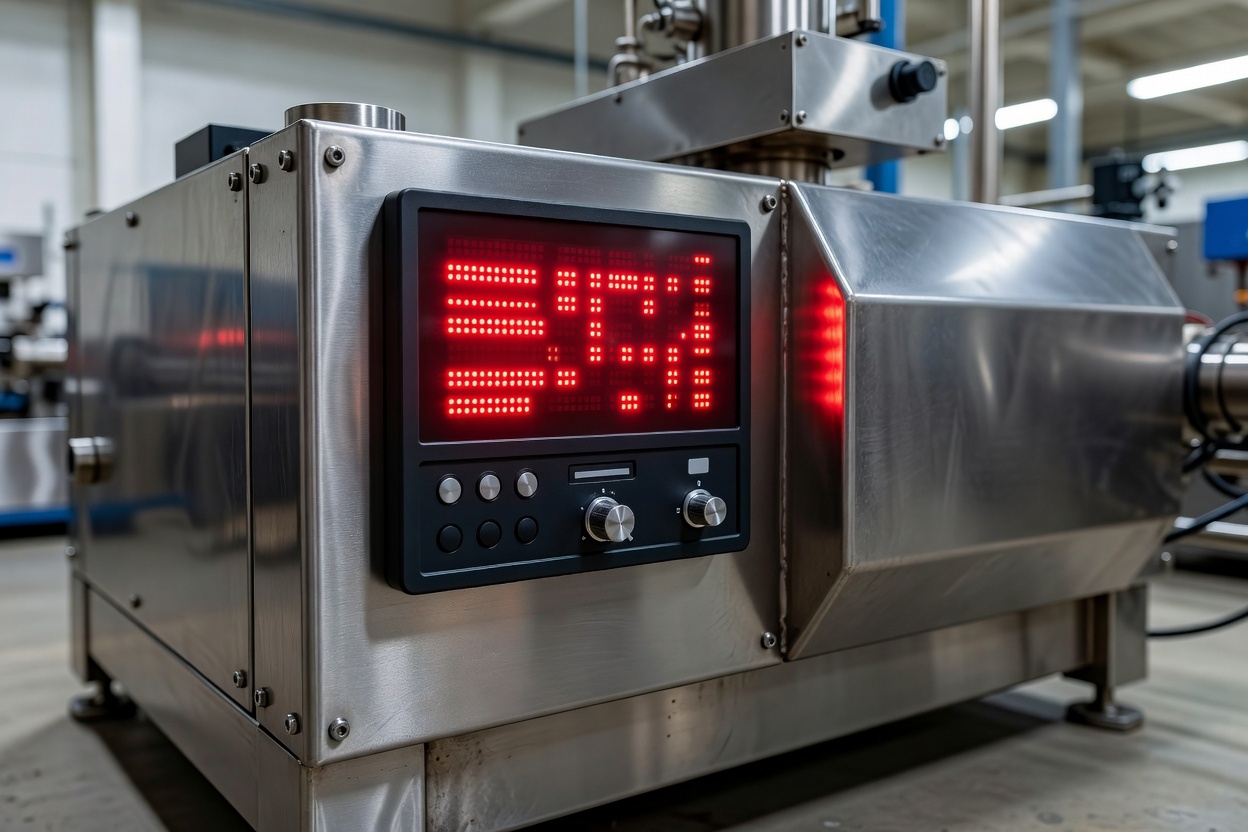
Modern precision machinery uses a PID (Proportional-Integral-Derivative) controller. This algorithmic computer continuously calculates the gap between the target temperature and current temperature, applying micro-pulses of electricity to the heating element. A good PID holds the brew boiler within 0.1°C of the target temperature.
Thermal Mass in the Group Head
Even if the boiler water is perfectly 93°C, if it travels through a cold brass group head, it will instantly lose thermal energy. The legendary E61 group head solves this via a thermosyphon loop. Hot water continually circulates from the boiler through the heavy 4-kilo brass group head and back, maintaining identical thermal mass throughout the entire fluid pathway.
Light Roasts vs Dark Roasts
Different roast levels demand different thermal approaches:
- Light Roasts: Denser cell structures require higher temperatures (94°C–96°C) to penetrate and extract fruit and floral compounds.
- Dark Roasts: highly porous and brittle, they extract very easily. Lower temperatures (88°C–90°C) prevent the over-extraction of harsh, ashy flavors.